For schools · Experiential learning
Where the syllabus grows.
Farm-based experiential learning for Pre-K to Grade 12 — designed with teachers, mapped to NEP 2020 and the SDGs, delivered in mud.
12,000+
students hosted
40+
partner schools, Delhi NCR
8
learning stations across 280 bighas
Pedagogy, not picnic
Every program moves through three deliberate phases — so the day produces learning outcomes, not just photographs.
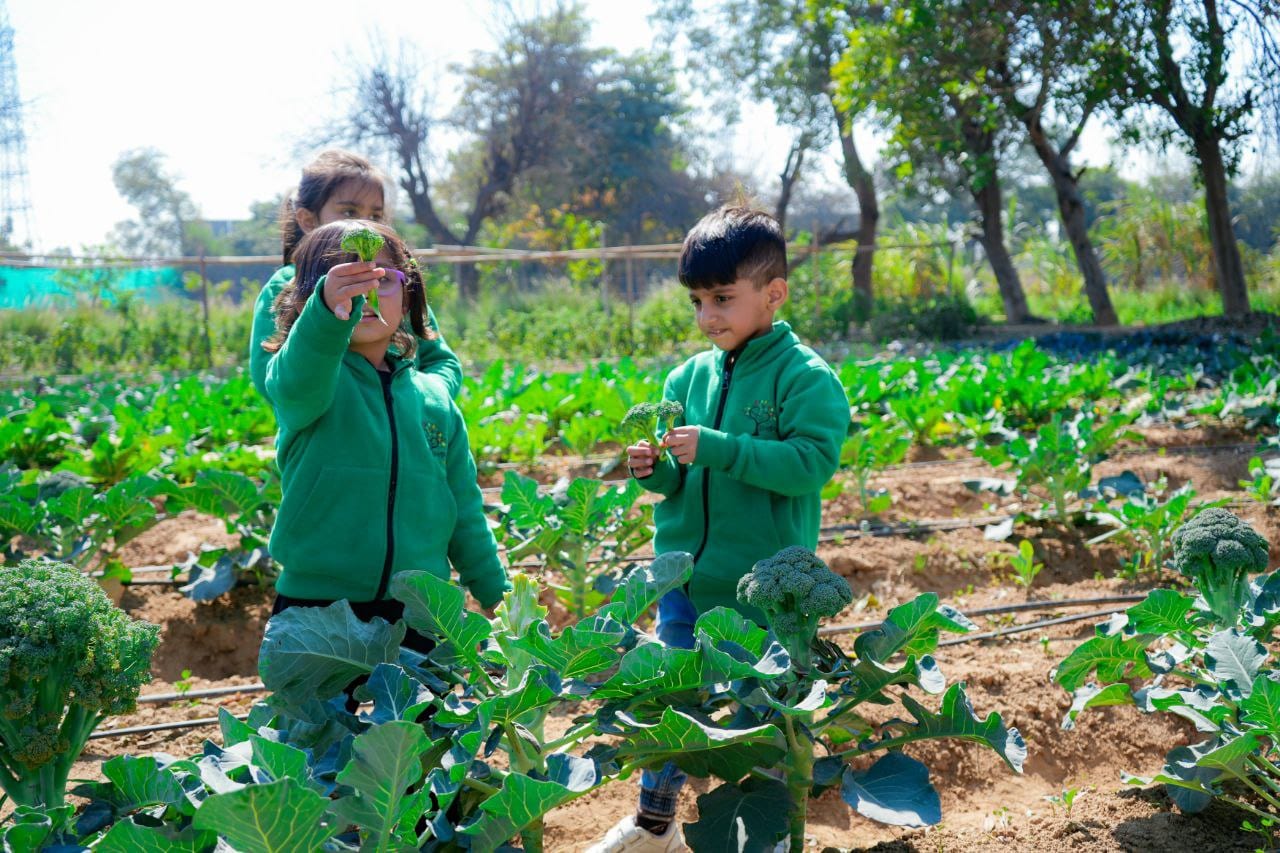
Hands in the soil: sowing, composting, milking, water-harvesting — real farm work scaled to each grade band.
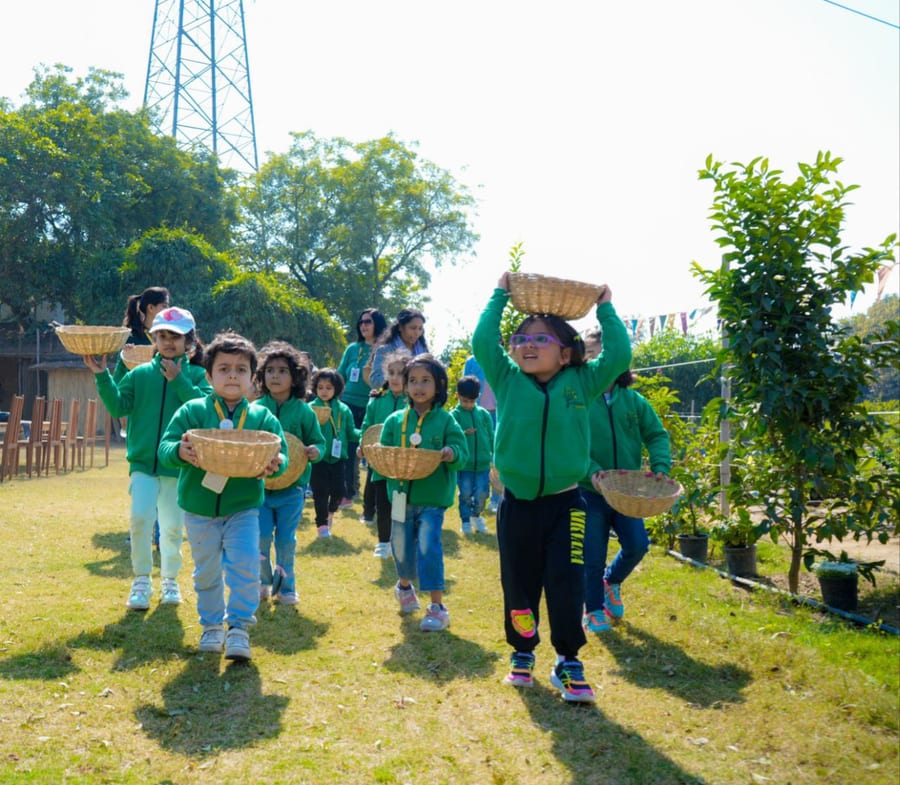
Journaling and guided discussion at the outdoor classroom — facilitated with prompts co-written with your teachers.
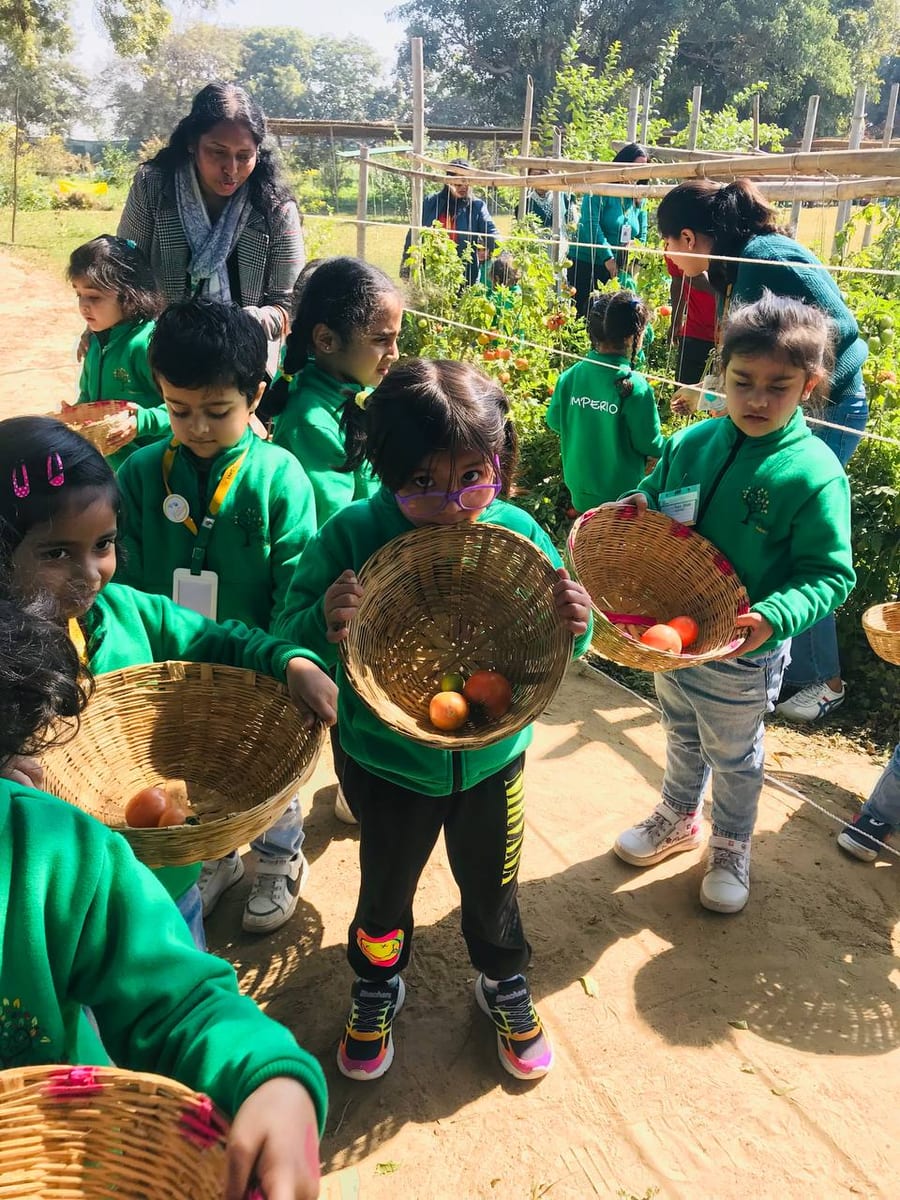
Every student leaves with a kitchen-garden kit and a 4-week classroom challenge — the farm follows them home.
Programs by grade band
Nursery–KG · max 60 children · 1:20 max ratio
Sample day
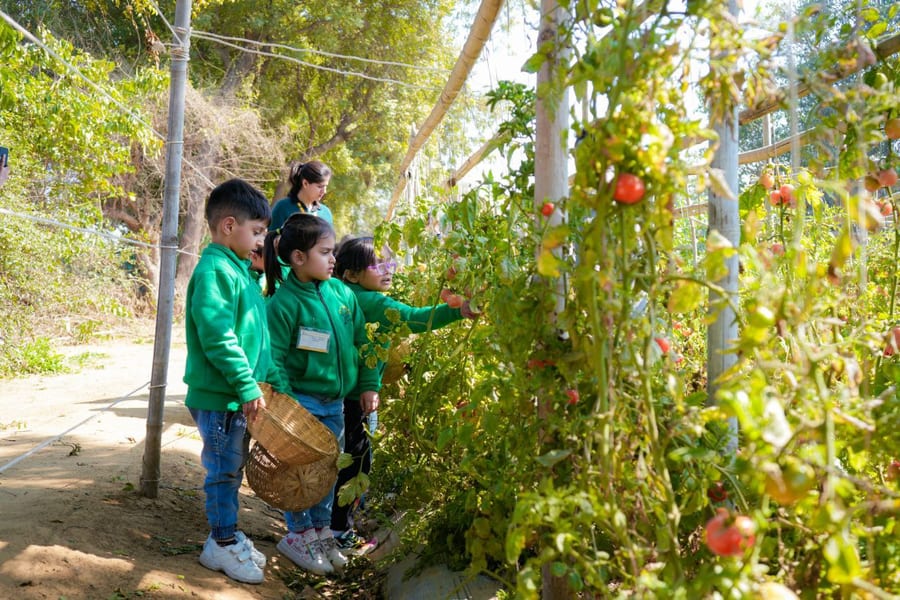
9:00 tractor welcome → 9:30 touch-and-smell herb trail → 10:15 animal friends hour → 11:00 fruit-picking & snack → 11:45 story circle under the banyan → 12:15 departure with sprouting kit.
Learning outcomes & links
The campus is the curriculum
Each station is a 25–40 minute lesson with its own facilitator, props and worksheet — sequenced differently for every grade band.
What principals decide on
Everything your transport committee, parents' WhatsApp group and risk-assessment form will ask — answered before they ask it.
Ask for the safety one-pagerTrained facilitators with every group, plus your teachers.
Certified first-aiders, doctor on call, hospital 12 min away.
Covered verandah for all wet-weather versions.
Farm kitchen meals, allergy protocols, RO water points.
Clean different gender washrooms.
Full-size buses parking available.
Educator voices
"The reflection journals wrote themselves. We've made it an annual Grade 4 expedition."
— Primary coordinator, partner school, Gurugram
"Our SDG documentation for accreditation came straight from their evidence sheets."
— IB coordinator, Delhi NCR
Plan your expedition